
How IMG helped a private school build a conversion-focused paid media strategy across Google and Meta.

How IMG helped a private school build a conversion-focused paid media strategy across Google and Meta.
A private school in the Northeast was actively investing in paid media across Google and Meta. Campaigns were live, generating impressions, clicks, and traffic. But no clear line existed between that activity and actual enrollment inquiries.
On Google, the campaign structure in place had not produced a single tracked conversion. On Meta, earlier campaigns had generated scattered lead activity across multiple campaign formats, with some producing results and others spending through budget without generating inquiries.
The visibility was already in place. What the school needed was the right partner to turn it into something measurable.
The school didn't need more traffic. It needed campaigns structured to convert that traffic into real enrollment inquiries.

The reactivated campaign started producing tracked conversions within its first weeks, and performance accelerated as optimization data accumulated. During the initial period, the campaign generated 6 conversions at $51.63 per conversion with a 5.50% conversion rate. As the campaign matured and refinements compounded, every key conversion metric improved.
Cost per click also held steady, even as volume grew significantly, confirming that the additional investment was generating traffic that converted more effectively.

The strongest conversion activity came from searches with clear enrollment intent. Keywords related to private schooling, faith-based education, and location-specific school options drove the vast majority of results. Device-level data played a role too: non-converting device segments were removed entirely, allowing the campaign to focus investment where results were actually happening.
The consolidated Lead Form campaign generated leads at a $120.98 overall cost per lead, producing a far more consistent source of inquiries than the previous campaign structure.
Performance wasn't linear. The strongest stretch delivered leads at a $70.47 cost per lead. When results dipped, targeted adjustments brought them back:
That ability to identify a downturn and course-correct quickly is part of what ongoing, hands-on management looks like in practice.
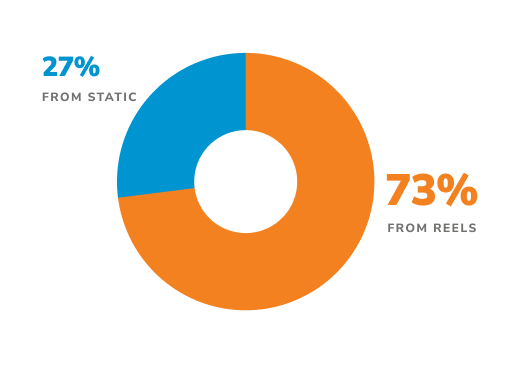
Reels drove the results, generating approximately 73% of all leads from the campaign. Two creatives carried the weight.
Google and Meta play different roles in this strategy, and that's intentional. Google connects with families who already know what they're looking for — the campaign is structured to show up at the moment of highest intent.
Meta works differently, generating inquiries from audiences who may not be actively searching yet but respond to compelling creative and a low-friction lead experience.
Together, both platforms create a paid media foundation where active demand is captured and new demand is generated — with performance measured against real enrollment inquiries.
more than clicks.
If your paid media is generating traffic but not leads, let's talk about what a better strategy looks like.
